"I AM MY OWN BEST FRIEND"
- katharinetonti
- Jul 29, 2025
- 5 min read
Updated: Apr 19
Original Post Date: 05.31.2020. Revised 07.19. 2025.
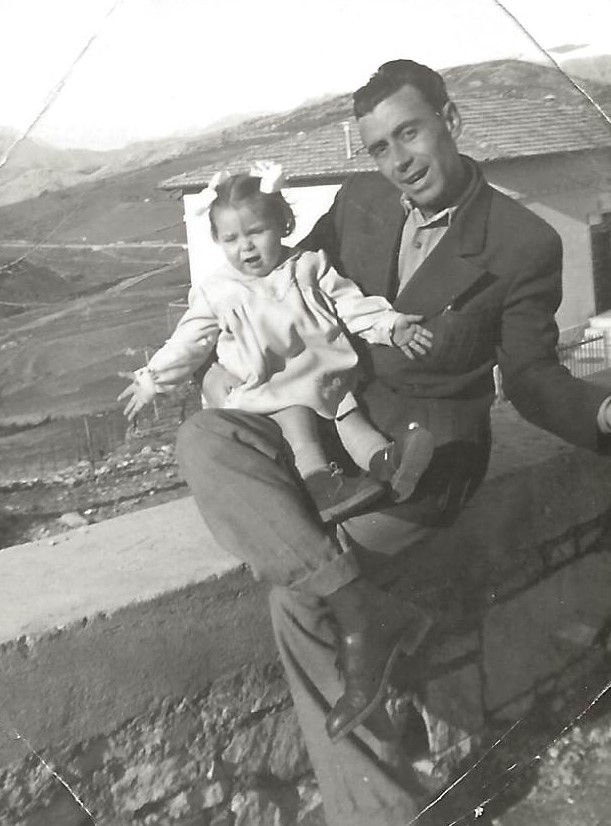
At the age of 85, my father decided to check the tiles on the roof of the one-story ranch he shared with my mom. He propped the ladder against the house, climbed up, and surveyed the damage from a recent storm.
When the ladder slid and crashed into the rose bush, he was left stranded on the peak of the roof like a Santa whose sled and reindeer had mysteriously disappeared. It occurred to him that his cell phone was resting on the kitchen table, right next to the morning newspaper. After more than 15 minutes of yelling for my mother (who couldn’t hear him because she was in the basement ironing) he realized his fate literally was in his hands.
So, he walked to the edge of the roof, stepped gingerly over the gutters, and threw himself into the nearby evergreen tree. Slowly….very slowly….he made his way to the ground. When he realized the worst of his exploits were his scratched arms and face and a bruised knee as a result of an unfortunate encounter with a thick branch, he dusted himself off, pulled freshly plucked pine needles out of his thinning hair, and limped toward the basement where, apparently, my mother got an earful in multiple languages for not hearing him bellowing from the rooftop.
My mother, at the age of 89, made it a habit of climbing up on the dining room table and stand on her toes to clean her beloved crystal chandelier. The thing was a monstrosity, and its gargantuan size was completely out of proportion with the rest of the house and all the furniture. And given the 25 or 30 “candles” that were always turned up to their maximum capacity during the holidays, it felt like you were having dinner in a tanning booth.
But she couldn’t have loved it any more than if it were the center piece of the great hall in Versailles. Up and down she’d climb, from chair to tabletop and back down again, polishing and shining crystal shards like the dancing feather duster in Beauty and the Beast.
And yet… they never asked each other for help.
Dad: “I vacuumed the garage.”
Mom: “Why didn’t you tell me? I would’ve helped.”
Dad: “We only have one Shop-Vac.”
My brother and I begged them to let us help. We pleaded, cajoled, implored. I even tried bribery: “How about I take you to lunch, and then we’ll tackle the garage/chandelier/garden together?”
“No,” they’d say. “You work. You’re busy. We’d have to wait until the weekend, and this needs to be done NOW.”
I know their reaction stemmed from wanting to remain independent and self-sufficient as long as possible. But a great deal of it had to do with culture – one that dominates our family, and others of Italian descent: we DO NOT ask for help. Asking for help is a sign of weakness. If you don’t have the physical strength to do something, then use the brains the good Lord gave you and figure out another way.
The second cultural aspect of asking for help is it then requires scorekeeping. If you help me, then I will have to help you, and that’s okay, unless I can’t do what you ask me to do, and then we’re uneven. And life can’t be uneven, not in the helping family and friends department. Oh, no, no, no, no, no.
Third, the thanks. Most Italians cannot simply say “thank you” and move on. They repeat it over and over again, and embellish it with other manifestations of appreciation, “Oh, you shouldn’t have,” “I can’t thank you enough”, etc. It’s a soliloquy of epic proportions. This is followed by a disproportionate payback scenario. You buy lunch, I buy you groceries for a week. You send flowers, I send you Martha Stewart to redo your garden. You take care of my cat for a weekend; I send your kids to college.
It. Is. Madness.
And when the tables are turned, and we do something for someone whose only response is “Gee, thanks,” we’re (1) concerned the act wasn’t big enough, kind enough, etc., or (2) are offended and immediately ask the question, “You’re not Italian, are you?”
If you think I’m exaggerating, ask any Italian-American of my generation about the "Guest Book" from a family wedding or funeral. Then sit down with your cup of espresso and get ready to be schooled.
I think I’ve done fairly well in the don’t ask for help department – not that I consider it an accomplishment, but seriously, how often can you keep asking the same friends for help?
But once again, the Universe insisted I learn a lesson.
Yesterday, I tried to move a hydrangea bush in front of my condo from one spot to another. Less than three feet separated original point A from new destination point B.
I struggled with this thing for two and a half hours, digging around it, leveraging the shovel, rocking the base back and forth, again and again and again. At one point, I sat on the ground, grabbed what was left of the above-ground stems, wrapped my legs around said shrub, and pulled and pushed, and pulled and pushed, to no avail. I gave an entirely new meaning to the phrase “tree hugger.”
My heart was pounding, the heat beating on me, sweat pouring into my eyes, my hands, arms, legs bruised and my fingers aching, Finally, I stopped. “Admit it,” I said to myself, “you’ve been beaten into submission by a plant.”
As I wallowed in the mud (literally) defeated and overcome by a sense of ineptitude, incompetence, and exhaustion, it also occurred to me that there is a fine line between stubbornness and stupidity. I am not a landscape architect, an arborist, or for that matter, a plant person. But I know someone who is. And the time had come to ask for help.
So, I called my friend Alana, a master gardener and plant whisperer.
“Of course I’ll come look,” she said. “I have the right tools—it’ll take ten minutes.”
I launched into a flurry of gratitude: “Oh, thank you so very much, I really—”
She cut me off. “Just do not touch the plant.” She said it with the authority of a professional horticulturalist and mother of three.
Like I was going to go anywhere near Audrey*.
(*For the uninitiated, Audrey is the man-eating plant from the musical Little Shop of Horrors.)

“I Am My Own Best Friend” is a song from the musical Chicago, with music by John Kander and lyrics by Fred Ebb. The show was first produced on Broadway in 1975.


Comments