"PHOTOGRAPHS AND MEMORIES"
- katharinetonti
- Mar 13
- 7 min read
March is Women’s History Month, and to celebrate, I’m doing something a little different.
This week I’ll be sharing three special posts—Monday, Wednesday, and Friday—honoring women who have made a lasting impression on me.
After this series, with a bit of the “luck of the Irish,” we’ll return to our regular Tuesday schedule on St. Patrick’s Day.
Thank you for your continued support.
03.13.2026
I chose not to have children, and honestly, I never had any regrets. But lately, hearing about cousins who are already grandparents—and even great-grandparents—reminds me that my particular branch of the family tree ends with me.
My parents never made a fuss about it, though I suspect it was one more disappointment they swallowed quietly and in private. It was yet another choice I made that didn’t conform to cultural expectations—one more thing they had to defend to their peers: a daughter who wouldn’t date Italian men, didn’t want children, and didn’t like to cook. I’m surprised my cultural rights weren’t revoked years ago.
That’s why I promised them a different kind of legacy. If our branch stopped with me, I would at least make sure it was documented.
So I coerced my parents into spending many Sunday afternoons piecing together our genealogy on Ancestry, sifting through birth certificates, ship manifests, marriage records, and immigration documents until we formed a substantial trunk of our family tree.
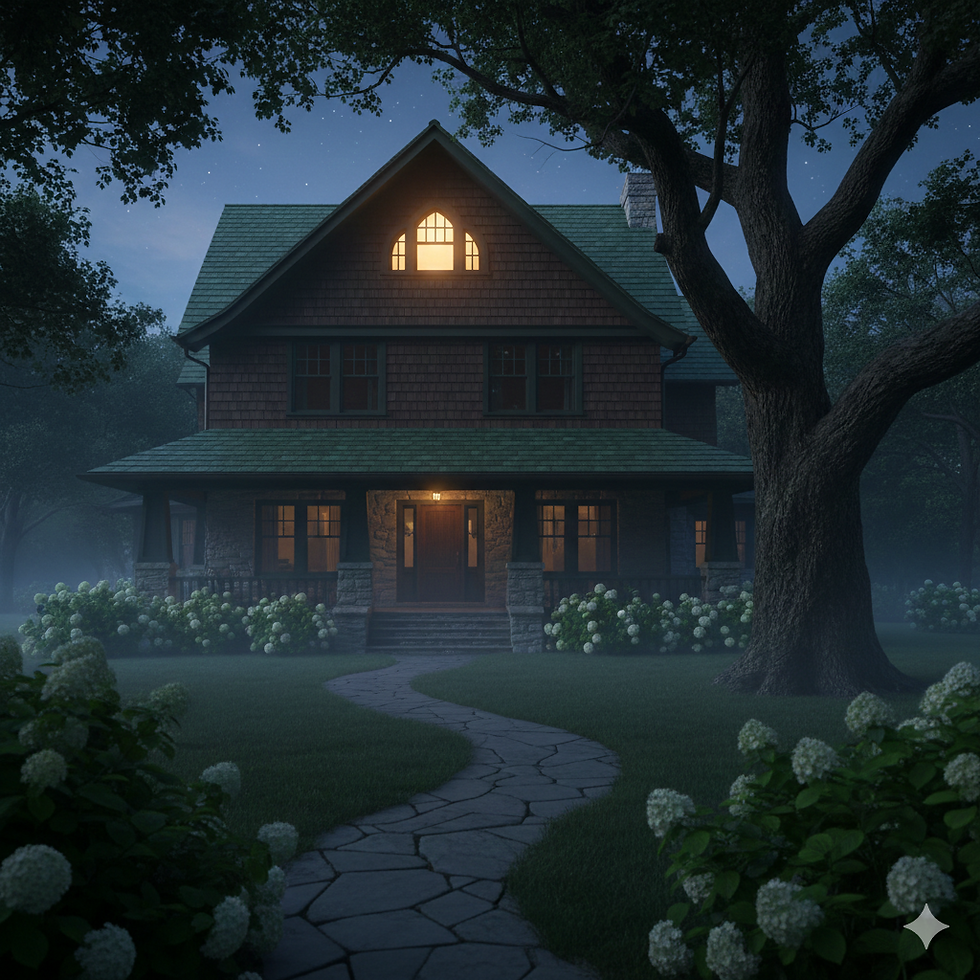
I reached out to distant relatives and asked if they wanted to contribute or help maintain it, but when they declined, I uploaded everything myself. I wanted to leave a light on in the digital attic of our house, in case someone, years from now, wondered how many other Eduardos, Lorenzos, Marias, and Concettas once filled the rooms.
To complete the task, I took one of those DNA tests. For a brief time, it told me I had roots in Sweden. I spent a few weeks feeling faintly Nordic, wondering which ancestor had wandered north—or south—and why, if I carried Scandinavian blood, I still couldn’t tolerate cold weather any better than I did.
Eventually, the Swedish connection disappeared, and the results settled exactly where I expected them to: a small village in Molise, Italy—precise and not at all surprising.
Then one day, a stranger contacted me through Ancestry.
She wrote that before her mother died, she confessed to having a short-lived affair with an Italian immigrant. The man had returned to Italy, and the daughter—the woman now writing to me—was searching for the father she had never known. There was a good chance, she said, that the man never knew he had fathered a child.
As we exchanged messages, I felt an immediate, visceral need to protect my family. The only improbable candidate was an uncle who had died two years before she was even born, but still, I felt like a police dog guarding the gates of our house.
Blood, it turns out, is thick when it comes to defending your own—even if they never know you’re doing it.
She was desperate. She began bending timelines, ignoring dates, manifests, birth certificates, and any other evidence that disproved her claims. When there was nothing left to dispute, she shifted her focus to my uncle’s son instead, insisting he must be her father.
She messaged me nearly every day for weeks, trying to force the pieces of a puzzle together as if sheer determination could make the story fit.
Eventually, I stopped replying. I couldn’t manufacture a history for her that didn’t exist.
Besides, I was standing at the farthest end of the branch of our family tree. I barely knew the generations before me, and most of them had passed decades ago. I knew her ending would not be the one she wanted.
Still, I felt a kinship with her because I understood her longing to know who she was and where she came from.
Ironically, although I am the keeper of my family tree, I find myself searching online for my family as well. My cousins and their children—and now their grandchildren—live in Italy, while I remain here in the United States. Our connection now is mostly digital: tagged photos, messages sent across the ocean.
But the DNA isn’t digital. It’s visible.
I study their faces.
Three generations after me, and we all share the same deep-set eyes. The same slight overbite. In photos, we tilt our heads in the same direction—to the right. One cousin always appears wearing a sweater (maybe the Swedish glitch wasn’t entirely wrong). Sometimes I look at one photograph and see the entire family condensed into a single person. It’s easy for me to see my story reflected in their faces. I know who I am, where I came from, and to whom I belong.
Meanwhile, her story remains a mystery.
It occurred to me that there is a bittersweet quality to both of our narratives, even though they are very different.
She is searching for the beginning of a story she didn’t choose. I am standing at the end of one.
But in some way, we are the same. We are both looking for proof that we belong to something larger than ourselves.
I don’t know how her story will end. But as long as I’m here, I intend to keep the light on in the attic of our house—just in case, someday, someone, somewhere, needs to find their way home.
And I hope, one day, she finds the light that leads her home, too.
This essay* is also available in Italian for my family and readers in Italy.
Ho scelto di non avere figli e, onestamente, non ho mai avuto rimpianti. Ma ultimamente, sentire parlare di cugini che sono già nonni – e persino bisnonni – mi ricorda che il mio ramo genealogico finisce con me.
I miei genitori non hanno mai fatto storie al riguardo, anche se sospetto che sia stata un'ulteriore delusione che hanno ingoiato in silenzio e in privato. È stata l'ennesima scelta che ho fatto, non conforme alle aspettative culturali, un'altra cosa che hanno dovuto difendere di fronte ai loro coetanei: una figlia che non voleva uscire con uomini italiani, non voleva figli e non le piaceva cucinare. Mi sorprende che i miei diritti culturali non siano stati revocati anni fa.
Ecco perché ho promesso loro un'eredità diversa. Se il nostro ramo si fermasse con me, mi assicurerei almeno che fosse documentata.
Così ho costretto i miei genitori a trascorrere molte domeniche pomeriggio a ricostruire la nostra genealogia su Ancestry, esaminando certificati di nascita, manifesti di spedizione, atti di matrimonio e documenti di immigrazione, finché non abbiamo formato un tronco consistente del nostro albero genealogico.
Ho contattato parenti lontani e ho chiesto loro se volessero contribuire o aiutarci a mantenerlo, ma quando hanno rifiutato, ho caricato tutto io stesso. Volevo lasciare una luce accesa nella soffitta digitale di casa nostra, nel caso qualcuno, anni dopo, si fosse chiesto quanti altri Eduardo, Lorenzo, Maria e Concetta un tempo occupassero quelle stanze.
Per completare il compito, ho fatto uno di quei test del DNA. Per un breve periodo, mi ha rivelato che avevo radici in Svezia. Ho trascorso alcune settimane sentendomi vagamente nordico, chiedendomi quale antenato si fosse spostato a nord – o a sud – e perché, se portavo sangue scandinavo, non riuscissi comunque a tollerare il freddo meglio di quanto non facessi.
Alla fine, il collegamento svedese svanì e i risultati si stabilizzarono esattamente dove mi aspettavo: un piccolo paese del Molise, in Italia, precisi e per nulla sorprendenti.
Poi un giorno, una sconosciuta mi contattò tramite Ancestry.
Mi scrisse che, prima di morire, sua madre confessò di aver avuto una breve relazione con un immigrato italiano. L'uomo era tornato in Italia e la figlia – la donna che ora mi scriveva – stava cercando il padre che non aveva mai conosciuto. C'erano buone probabilità, disse, che l'uomo non sapesse mai di essere il padre di un figlio.
Mentre ci scambiavamo messaggi, sentii un immediato e viscerale bisogno di proteggere la mia famiglia. L'unico candidato improbabile era uno zio morto due anni prima che lei nascesse, ma mi sentivo comunque come un cane poliziotto a guardia del cancello di casa nostra.
A quanto pare, il sangue è denso quando si tratta di difendere i propri cari, anche se non lo sanno mai.
Era disperata. Iniziò a modificare le linee temporali, ignorando date, manifesti, certificati di nascita e qualsiasi altra prova che confutasse le sue affermazioni. Quando non ci fu più nulla da contestare, spostò invece l'attenzione sul figlio di mio zio, insistendo che dovesse essere suo padre.
Mi mandò messaggi quasi ogni giorno per settimane, cercando di mettere insieme i pezzi di un puzzle come se la pura determinazione potesse far combaciare la storia.
Alla fine, smisi di risponderle. Non potevo inventare per lei una storia che non esistesse.
Inoltre, mi trovavo all'estremità più lontana del ramo del nostro albero genealogico. Conoscevo a malapena le generazioni precedenti alla mia, e la maggior parte di loro era morta decenni prima. Sapevo che la sua fine non sarebbe stata quella che desiderava.
Eppure, sentivo un'affinità con lei perché capivo il suo desiderio di sapere chi fosse e da dove venisse.
Ironicamente, sebbene io sia il custode del mio albero genealogico, mi ritrovo a cercare online anche la mia famiglia. I miei cugini e i loro figli – e ora anche i loro nipoti – vivono in Italia, mentre io rimango qui negli Stati Uniti. Il nostro legame ora è per lo più digitale: foto taggate, messaggi inviati oltreoceano.
Ma il DNA non è digitale. È visibile.
Osservo i loro volti.
Tre generazioni dopo di me, e condividiamo tutti gli stessi occhi infossati. La stessa leggera malocclusione. Nelle foto, incliniamo la testa nella stessa direzione: a destra. Un cugino appare sempre con un maglione (forse il difetto svedese non era del tutto sbagliato). A volte guardo una fotografia e vedo l'intera famiglia condensata in una sola persona. È facile per me vedere la mia storia riflessa nei loro volti. So chi sono, da dove vengo e a chi appartengo.
Nel frattempo, la sua storia rimane un mistero.
Mi sono reso conto che c'è un tocco agrodolce in entrambe le nostre narrazioni, anche se sono molto diverse.
Sta cercando l'inizio di una storia che non ha scelto. Io sono in piedi alla fine di uno.
Ma in un certo senso, siamo uguali. Cerchiamo entrambi la prova che apparteniamo a qualcosa di più grande di noi.
Non so come finirà la sua storia. Ma finché sarò qui, intendo tenere accesa la luce nella soffitta di casa nostra, nel caso in cui, un giorno, qualcuno, da qualche parte, abbia bisogno di ritrovare la strada di casa.
E spero che, un giorno, anche lei trovi la luce che la conduce a casa.
*Translated using Google Translate


Thanks, yet again, for speaking to parts of our lives. My son is the genetic end of this branch of the family and he and I both post stories, photos and research in Ancestry. My hope is that a descendant on another branch will someday delight in the details. My DNA search did discover a small Viking connection which is likely since many of my family lived on islands and places close to oceans. Those intrepid sailors likely contributed some DNA then sailed away.