"OUR HOUSE IS A FINE HOUSE"
- katharinetonti
- Mar 24
- 9 min read
03.24.2026
My fascination with great blue herons began about twenty years ago, when my ex and I bought a house in a development that had once been a dairy farm.
The property came with a pond, and our kitchen windows faced it. Everyday chores—washing dishes, drying pots and pans, wiping counters—were often interrupted by weather, cattails, dragonflies, and sunlight skipping across the surface of the water. It turned an ordinary moment into an unexpected source of meditation.
One year, the pond started to receive a visitor: a great blue heron. He always came alone. He would take up his position at one end of the pond, his reed-like legs submerged, body held in that unmistakable heron posture—standing as still as a stone.
Eventually, his patience would be rewarded. With a sudden movement—honed by instinct and precision—he would strike, then rise, wings opening wide, and swoop into the sky. He’d make a final circle above the pond, then disappear over the neighbors' rooftops.
His arrival became an event in our small household. When either my ex or I would spot him, we'd yell out, "Big Blue is here!" We’d rush to the window and stare at him with the same intensity he stared at the water. It felt as if, by watching him—quietly, barely taking a breath—we might somehow help him find his prey faster. For a brief period of time, the kitchen would be silent. Our only focus was on one tall bird, one dark pond, and the possibility of a fish breaking the surface.
Then one spring, Big Blue brought a guest. By its coloring, we assumed it was a female, and we celebrated the couple with an enthusiasm that surprised us. We watched them the way people watch a couple starting a life together—full of hope for what might be, even imagining that one day, a "Little Blue" might join them. But after a month or so, Ms. Blue stopped coming, and Big Blue resumed his visits in solitude.
That’s how it is sometimes. We meet someone and, little by little, we open our world to them. We start showing them our favorite places. Almost without noticing, we begin to build a bond—a future, a story with space for two. And then one day, they’re gone.
For several years after, that’s what happened with Big Blue. He arrived alone. Whether he was single again by choice or by circumstance, we kept our eye on him and, in the quiet way you care for a soul you cannot protect, hoped that whatever his destiny, he was safe and at peace.
When my ex and I divorced, I bought a condo less than a mile away from that pond. Occasionally, I would look up at the sky, hoping I’d see Big Blue circling over the rooftops, and I wondered if he still frequented the area.
After a while, I stopped. Life does what it does: it adds errands and obligations and robs you of the luxury of standing still long enough to stare at the sky. But I didn’t forget about Blue. Some presences stay with you. They become part of your inner landscape, like a landmark you carry home after a long and difficult stint on the road.
Somewhere along the way, I learned there was a blue heron rookery not far from the Cleveland Orchestra’s summer home at Blossom. I added it to my list of places to visit, and it lived there in the way we bookmark all those "someday" places: Yes, I’ll get there one of these days.
I decided to go. The day was deceptive, as many days are in the transition between winter and spring. The temperature promised fifty-nine degrees, but the wind shaved at least twenty off that number. A storm was coming, and the clouds rushed in like they were late for a meeting—intense, purposeful, and rearranging the agenda as if they were in charge.
I pulled over to the side of the road. At least half a dozen other cars were already there, and it felt like an intrusion on my private pilgrimage. Nevertheless, I parked, crossed the street, and made my way toward the marsh.
Several tall trees rose from the wetland—leafless, gray, and spare, like ghost trees who couldn’t understand why they still inhabited this realm. One of them contained the rookery. High in its upper branches, at least twenty nests were perched like rough, woven baskets. Great blue herons flew in and out, turning the tree into a sort of celestial apartment complex.
I found myself thinking about what that tree was holding: the weight of nests, the fragile eggs, and the heft of dozens of birds who chose those bare limbs as the place to build their homes. The herons moved in a hypnotic rhythm. Some searched the marsh for twigs, still building, still adjusting, still making the place more fit for life. Others returned carrying food, each bird weaving its way back to its own nest as if following a map visible only to them.
I thought about those forty or so herons, their willingness to live so high up, to trust that a ghost tree would hold the lives they so carefully constructed. The wind was thoughtless and unforgiving as it whipped through the branches. Even from the ground, you could see the rookery sway under the combined weight of the weather and the nests, and I wondered why they chose to live in such a precarious environment.
Yet the birds went about their business: steady and trusting in both nature and themselves. They didn’t seem to mind the visitors gathered below, so long as we were respectful—quiet, still, and appropriately in awe.
I couldn’t help but wonder if Big Blue was among them—if he had found his partner at last, or if he was still, literally and figuratively, flying solo. I realized that suddenly, more than anything, I wanted him paired—not because solitude is a failure, but because the world so often seems built for a party of two, and I didn’t want him left without a place in this story.
And yet, if he wasn’t—if he still chose the quiet end of a pond and the long wait for a flash of silver to cut through the water—I have no doubt he would survive. Because in that stillness and that persistence, I recognized something important, and deeply human.
We lose what we thought would stay. We keep going anyway. We circle back to familiar water, and when the time is right, we rise up and start to build again—trusting that the ghost tree, and its fragile branches, will hold us, even when they sway.
For family and friends who enjoy reading in Italian.
Il mio fascino per gli aironi azzurri maggiori ebbe inizio circa vent'anni fa, quando io e il mio ex acquistammo una casa all'interno di un complesso residenziale che, un tempo, era stato un caseificio.
La proprietà comprendeva uno stagno, e le finestre della nostra cucina vi si affacciavano direttamente. Le faccende quotidiane — lavare i piatti, asciugare pentole e padelle, pulire i piani di lavoro — venivano spesso interrotte dal mutare del tempo, dalle tife, dalle libellule e dal gioco di luce che danzava sulla superficie dell'acqua. Ciò trasformava un momento ordinario in un'inattesa occasione di meditazione.
Un anno, lo stagno iniziò a ricevere la visita di un ospite: un airone azzurro maggiore. Arrivava sempre da solo. Andava a posizionarsi a un'estremità dello stagno, con le zampe sottili come canne immerse nell'acqua e il corpo mantenuto in quell'inconfondibile postura tipica degli aironi: immobile, rigido come una pietra.
Alla fine, la sua pazienza veniva ricompensata. Con un movimento improvviso — affinato dall'istinto e dalla precisione — sferrava il colpo; poi si sollevava, spalancava le ali e si lanciava verso il cielo. Compiva un ultimo giro sopra lo stagno, per poi scomparire oltre i tetti delle case vicine.
Il suo arrivo divenne un evento nella nostra piccola casa. Ogni volta che io o il mio ex lo avvistavamo, gridavamo: «Big Blue è arrivato!». Ci precipitavamo alla finestra e lo fissavamo con la stessa intensità con cui lui fissava l'acqua. Ci sembrava quasi che, osservandolo — in silenzio, trattenendo a malapena il respiro — avremmo potuto in qualche modo aiutarlo a scovare la sua preda più in fretta. Per un breve lasso di tempo, in cucina calava il silenzio. La nostra attenzione era rivolta unicamente a quell'alto uccello, a quello stagno scuro e alla possibilità che un pesce rompesse la superficie dell'acqua.
Poi, una primavera, Big Blue portò con sé un ospite. A giudicare dalla colorazione, supponemmo che si trattasse di una femmina, e accogliemmo la coppia con un entusiasmo che sorprese persino noi stessi. Li osservavamo con lo stesso sguardo con cui si guarda una coppia che sta iniziando una vita insieme: colmi di speranza per ciò che il futuro avrebbe potuto riservare, arrivando persino a immaginare che, un giorno, un «Little Blue» si sarebbe unito a loro. Ma dopo circa un mese, la Signora Blue smise di farsi vedere, e Big Blue riprese le sue visite in solitudine.
A volte va proprio così. Incontriamo qualcuno e, a poco a poco, apriamo il nostro mondo a quella persona. Iniziamo a mostrarle i nostri luoghi preferiti. Quasi senza rendercene conto, cominciamo a costruire un legame: un futuro, una storia in cui c'è spazio per due. E poi, un giorno, quella persona non c'è più.
Per diversi anni a seguire, fu esattamente ciò che accadde con Big Blue. Arrivava da solo. Che fosse tornato a essere un solitario per scelta o per circostanza, continuammo a vegliare su di lui e — con quella discreta premura con cui ci si prende cura di un'anima che non si ha il potere di proteggere — sperammo che, qualunque fosse il suo destino, egli fosse al sicuro e in pace.
Quando io e il mio ex abbiamo divorziato, ho comprato un appartamento a meno di un miglio di distanza da quello stagno. Di tanto in tanto, alzavo lo sguardo verso il cielo, sperando di scorgere Big Blue che volteggiava sopra i tetti, e mi chiedevo se frequentasse ancora quella zona.
Dopo un po', ho smesso. La vita fa il suo corso: aggiunge commissioni e obblighi, e ti priva del lusso di restare immobile abbastanza a lungo da fissare il cielo. Ma non ho dimenticato Blue. Certe presenze ti restano dentro. Diventano parte del tuo paesaggio interiore, come un punto di riferimento che ti porti a casa dopo un lungo e faticoso viaggio.
A un certo punto, ho scoperto che esisteva una garzaia di aironi azzurri non lontano dalla sede estiva della Cleveland Orchestra, a Blossom. L'ho aggiunta alla mia lista di luoghi da visitare, e lì è rimasta, proprio come facciamo con tutti quei luoghi da "un giorno o l'altro": sì, prima o poi ci andrò.
Ho deciso di andarci. La giornata era ingannevole, come spesso accade nel passaggio tra l'inverno e la primavera. La temperatura prometteva cinquantanove gradi, ma il vento ne sottraeva almeno venti. Si stava avvicinando un temporale e le nuvole accorrevano in fretta, come se fossero in ritardo per una riunione: intense, determinate, e intente a riorganizzare l'ordine del giorno come se fossero loro a comandare.
Ho accostato a lato della strada. C'erano già almeno una mezza dozzina di altre auto, e la cosa mi è sembrata un'intrusione nel mio pellegrinaggio privato. Ciononostante, ho parcheggiato, ho attraversato la strada e mi sono diretto verso la palude.
Diversi alberi alti svettavano dalla zona umida: spogli, grigi ed essenziali, simili ad alberi fantasma che non riuscivano a comprendere perché abitassero ancora in questo regno. Su uno di essi sorgeva la garzaia. In alto, tra i rami più alti, erano appollaiati almeno venti nidi, simili a rozze ciotole intrecciate. Gli aironi azzurri maggiori entravano e uscivano in volo, trasformando l'albero in una sorta di condominio celeste.
Mi sono ritrovato a riflettere su ciò che quell'albero stava sostenendo: il peso dei nidi, la fragilità delle uova e la massa di decine di uccelli che avevano scelto quei rami nudi come luogo in cui costruire le proprie dimore. Gli aironi si muovevano seguendo un ritmo ipnotico. Alcuni cercavano ramoscelli nella palude, continuando a costruire, ad aggiustare, a rendere quel luogo sempre più adatto alla vita. Altri facevano ritorno portando cibo; ogni uccello si faceva strada verso il proprio nido come se seguisse una mappa visibile soltanto a loro.
Pensai a quei circa quaranta aironi, alla loro volontà di vivere così in alto, di fidarsi del fatto che un albero fantasma avrebbe retto le vite che avevano costruito con tanta cura. Il vento era sconsiderato e spietato mentre sferzava tra i rami. Anche da terra si poteva vedere la colonia ondeggiare sotto il peso combinato delle intemperie e dei nidi, e mi chiesi perché avessero scelto di vivere in un ambiente così precario.
Eppure gli uccelli proseguivano nelle loro faccende: saldi e fiduciosi, sia nella natura che in se stessi. Non sembravano curarsi dei visitatori radunati laggiù, a patto che fossimo rispettosi: silenziosi, immobili e pieni di un adeguato stupore.
Non potei fare a meno di chiedermi se tra loro vi fosse anche Big Blue; se avesse finalmente trovato una compagna, o se stesse ancora, letteralmente e metaforicamente, volando da solo. Mi resi conto che, d'un tratto, più di ogni altra cosa desideravo vederlo accoppiato; non perché la solitudine sia un fallimento, ma perché il mondo sembra così spesso costruito per una coppia, e non volevo che lui rimanesse privo di un posto in questa storia.
E tuttavia, se così non fosse stato — se avesse ancora scelto la quiete di un angolo dello stagno e la lunga attesa di un lampo d'argento che solcasse l'acqua — non ho dubbi che sarebbe sopravvissuto. Perché in quella quiete e in quella perseveranza riconobbi qualcosa di importante, e profondamente umano.
Perdiamo ciò che credevamo sarebbe rimasto. Eppure andiamo avanti lo stesso. Facciamo ritorno ad acque familiari e, quando giunge il momento giusto, ci leviamo in volo e ricominciamo a costruire; fiduciosi che l'albero fantasma, con i suoi rami fragili, saprà reggerci, anche quando ondeggia.

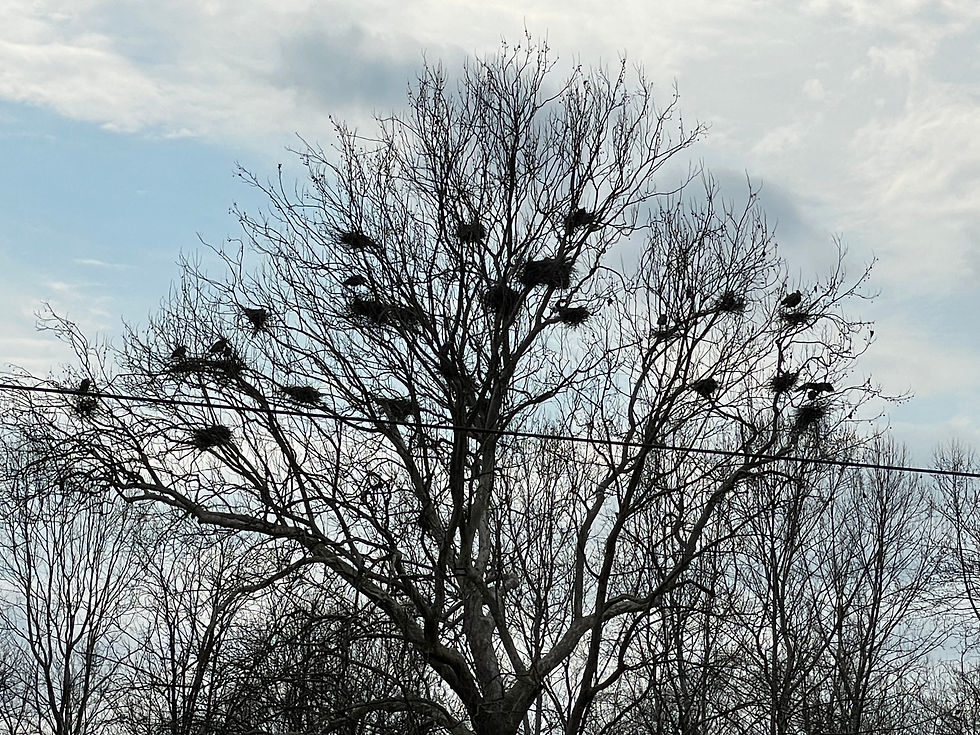


Adult male herons are typically three feet tall and weigh three pounds. That seems to be a fragile, and yet obviously enduring, life.
Kate: I am so glad that I am now a subscriber. These are really thought provoking and I enjoy getting them.
I love your writing, the flow, the intensity, the honesty. I just wish it were longer so I could curl up on the couch and disappear into its welcoming arms.🥰